Stories That Kill, Stories That Protect

I grew up in movement. Team sports, solo sports, and a lot of time on the tatami. Martial arts were not a hobby; they were like a second home. I lived in that world of repetition, bruises, discipline and respect. In the 80ies and 90ies, you did not just practice martial arts, you breathed them. Samurai culture slipped in through that door, through punishments and rewards. And of course, meditation after every session. The stories, the posture, the idea that duty and identity can be the same. Look at your opponent like looking at the Fujiyama. The narrative.
Years later, almost without realizing it, life had led me into nearly two decades of close protection work across five continents: different era, different tools, but the same questions about loyalty, violence and belief.
Recently, I binged the series “Last Samurai Standing”, then my brain went off, something clicked. My head filled with connections. Old warrior cultures, modern CPO work, lone actors shaped by online echo-chambers, the hybrid zone where physical, digital and cognitive layers meet. It all pointed to the same thing: the quiet inception phase when a belief becomes so strong that killing or dying starts to feel like duty. That is where motivation lives.
Samurai: when duty and identity fuse
Historically, samurai were not free agents looking for a fight. They were retainers. The word itself comes from a verb that means “to serve” and originally described those who served aristocratic households and later feudal lords. Their role was to protect the domain, enforce order, and stand between their lord and threats. From a young age, samurai candidates were wrapped in a web of stories, rituals and training. Over time, this was described under the label bushidō, the way of the warrior, a warrior ethic that emphasised loyalty, honour, self-control and a particular attitude toward life and death. The idealised samurai in that literature is someone whose sense of self is welded to service. A good life is one lived in line with duty, even if it ends early. Look at the motivators in that system:
- Identity - “this is the kind of person I am”.
- Belonging - clan, comrades, hierarchy.
- Practical rewards - status, pay, permission to use skill and force.
- Moral frame and virtues - violence is acceptable only inside a recognised role and chain of command.
In modern legal and ethical terms, there is a lot to criticise, but one thing is clear: the inception phase for these warriors points the sword outward in a controlled way. The story of “who I am” and “who I serve” channels aggression into protection, at least in theory. Healthy modern close protection is built on a similar structure, updated for law and human rights. Most good CPOs I meet are driven by:
- A protective instinct toward others (I will write one day about the black cat Shinobi-mission)
- Recognition and honest pay
- Satisfaction from taking responsibility in high-stress environments
- Professional pride in doing complex, often invisible work well
- A belief that human life and lawful authority are worth defending
Procedure, training and legal frameworks sit on top of that. For many of us with martial arts, military or law enforcement backgrounds, CPO work is a socially beneficial channel for traits that could otherwise go wrong. The inception phase leads to a role where your job is to absorb risk so others do not have to. The question is what happens when the same human ingredients are mixed differently.
Lone actors: same hardware, different story
Lone actor or “lone wolf” terrorism research shows that attackers do not usually appear out of nowhere. They travel a pathway. Hamm and Spaaij’s analysis of lone actor terrorism in the United States, for example, finds recurring patterns of grievance, exposure to extremist narratives, and identity shift before an attack. McCauley and Moskalenko describe radicalisation more broadly as a movement along a series of mechanisms that transform shared grievances and fears into extreme opinions, then justification of violence, then action. The key is not a single cause but the way emotions, stories and social dynamics stack. (ResearchGate) Across multiple studies, three clusters keep coming back for lone actors specifically:
- Motivation
- Social environment
- Psychological vulnerabilities
Motivation: from hurt to mission
For many lone actors, motivation begins with grievance. Like,
- Personal: job loss, illness, debt, humiliation, family breakdown, rejection.
- Political, ideological or religious: “my people are under attack”, “the system is corrupt”, “they are abusing children”, “they are replacing us”, "the election is stolen".
Disinformation, influence ops and conspiracy narratives are powerful because they fuse these layers. Suffering is no longer “bad luck” or “life is hard”. It becomes proof of a deliberate enemy. Someone did this to you. Someone is doing this to your group. At that point a new identity can form. Not just a victim, but a defender. The person begins to see themselves as someone who has to act. In healthy protector cultures, that heroic script is constrained by law, training and supervision. For lone actors, there is no such brake. They self-appoint as judge, jury, and executioner.
Social environment: thin offline, thick online
The “lone” in “lone actor” refers to operations, not to influence. Many are socially isolated offline but richly connected online. Several reviews find high rates of social isolation and life stress in lone actor samples compared with group-based terrorists. In simple terms:
- Offline: fragile support networks, few stabilising relationships, often conflict with family or colleagues.
- Online: dense networks of like-minded strangers who confirm and intensify their views.
The Buffalo supermarket shooter’s manifesto and online diary, for example, describe spending “years of my life just being online” and identify fringe boards like 4chan’s /pol/ as key sources of racist and extremist content. In a dojo or protective team, peers and seniors can push back on dark fantasies and pull someone back into reality. In an echo chamber, people cheer those fantasies on.
Psychological vulnerabilities: amplifier, not destiny
The relationship between mental disorder and terrorism is often misunderstood. Broad terrorist samples as a whole do not show dramatically higher rates of mental illness than the general population.
Lone actors are different.
Corner and Gill, using a dataset of 119 lone actors and a matched sample of group-based terrorists, found that the odds of a lone actor having a diagnosed mental illness were about 13.5 times higher than for a group actor. Roughly one-third of lone actors in their sample had such a diagnosis at some point in life (ResearchGate). Other work suggests that conditions involving paranoia, rigid beliefs, social difficulties, or intense mood problems can make some individuals more vulnerable to grievance-fueled narratives, especially when combined with trauma and isolation (Pure). The careful way to say it is:
- Most lone actors are not “insane” in a cinematic sense.
- Mental disorders do not automatically cause violence.
- For a minority, psychological vulnerabilities can amplify the impact of disinformation, grievance and stress, and erode their ability to reality check extreme beliefs.
In other words, the hardware is the same human brain, but some systems are more fragile.
Modern cases: stories turning into shots
You can see this pattern in several recent attacks that grew out of narratives rather than organisations.
Pizzagate (2016) - A false conspiracy theory spread online that a Washington DC-pizzeria, Comet Ping Pong, was the centre of a child abuse ring linked to senior politicians. On 4 December 2016, Edgar Maddison Welch, a 28-year-old from North Carolina, drove to the restaurant with an AR-15 style rifle, fired several shots inside, and later told police he had come to “self-investigate” and rescue children (www.elsevier.com). No group sent him. What he had was a storyline he believed.
Killing of Brian Thompson, UnitedHealthcare CEO (2024) - On 4 December 2024, UnitedHealthcare CEO Brian Thompson was shot dead outside a New York hotel. Luigi Mangione, an Ivy League graduate from a wealthy background, has been charged. Investigators and an NYPD intelligence report suggest he was motivated by hatred of the health insurance industry, which he framed as parasitic and harmful, and that he saw Thompson as a symbol of that system. Evidence under dispute includes a notebook and online writings criticising insurers and referencing anti-system texts (SciSpace). Again, this is a self-selected target aligned with a personal narrative about injustice.
Buffalo supermarket shooting (2022) - In Buffalo, New York, an 18-year-old gunman killed ten people, most of them Black, at a supermarket in a predominantly Black neighbourhood. He livestreamed the attack and left a 180-page manifesto drawing heavily on white supremacist “Great Replacement” ideas, and memes learned from 4chan and similar platforms (Wikipedia).
Hanau Attack (2020) - In Hanau, Germany, a shooter killed nine people at shisha bars and then killed his mother and himself. He left behind a manifesto and videos mixing traditional far-right racism with fringe conspiracy theories and personalised world views (Migration and Home Affairs). Across these cases, the operational pattern is similar:
- The actor plans and executes alone.
- The cognitive environment is crowded: forums, video platforms, chats, manifestos.
- Motivation blends personal frustration with a bigger story that frames violence as necessary or heroic.
- Social environments are thin offline and intense online.
- In some cases there are mental health vulnerabilities in the background.
The hybrid zone is visible: physically alone with a weapon, virtually surrounded by thousands of people in the same narrative world.
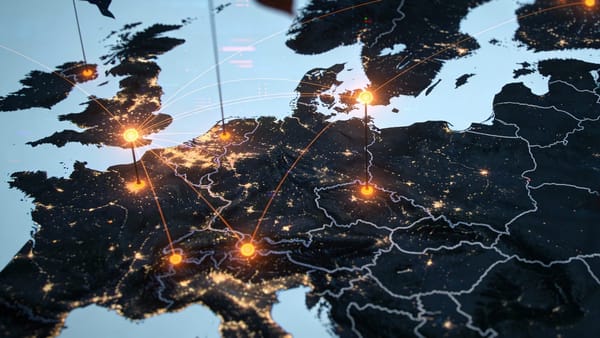
The hybrid zone: connected and isolated at once.
Ancient warriors received their stories around real fires, in real halls, from people they could touch. The process was slow and visible. Today, the inception phase often unfolds on screens. The same technologies that connect people also isolate them.
- Algorithms feed you more of what keeps you engaged, not more of what is true.
- Echo chambers let you live inside a single storyline with very little contradiction.
- Extremist and conspiratorial content is packaged as entertainment, humour, or “just asking questions” and is shared at viral speed (Pure).
- Lone actor attacks are increasingly highlighted in European and global threat assessments as a growing challenge precisely because their planning is relatively isolated and can appear “near spontaneous” from the outside (Aarhus University).
The basic human pathway is the same as in older times:
Grievance → story → identity → perceived duty → trigger → act.
The difference now is speed, reach and opacity. What once took years of socialisation can be compressed into months or weeks of intense online immersion.
Two branches of the same human hardware
This, is the uncomfortable conclusion: the same building blocks that can make a protector can also, under different conditions, make a lone actor.
- On one branch, the story of duty is tied to real people, teams and rules. Motivation is to protect and belong. Violence, if it ever happens, is constrained by law, training and command. That is where healthy protector identities live, including modern CPOs.
- On the other branch, the story of duty floats free of any legitimate structure. Motivation is significant, revenge, or purity with no external brakes. Technology connects people to others who believe the same and shields them from challenges. If psychological vulnerabilities and life crises are present, that branch can accelerate into lone-actor violence.
Same species. Different story. Different environment.
For those of us in protection, that is not a reason to see ourselves as similar to attackers. It is a reminder that narrative and context matter, for “them” and for us.
What this actually gives you as a CPO
If you are working a protective detail, driving, doing advances, or leading a small team, what does all this theory and history actually give you. There is no reliable “lone wolf look”. You will not spot them from twenty metres on clothing alone. What you can tune into is a pattern of content and emotion:
- Obsessive focus on a grievance or conspiracy
- Language of “no choice left”, “someone has to act”, “no one is listening”
- Sudden emotional spikes when a certain topic or person is mentioned
When you hear or see that around your principal, you treat it as more than eccentric talk. You document it, you report it, and you watch for repeat encounters.
Situational awareness beyond body language
Situational awareness is not just who looks tense at the hotel entrance. This perspective says that threats can be shaped far away, then appear at your perimeter. So as a team you try to stay at least roughly aware of:
- Which issues around your principal or organisation are “hot” right now
- Whether there are active conspiracies or disinformation waves that make your client a symbol
- Whether hostile email, social media or calls spike after certain decisions or media stories
You might not be the one handling online monitoring, but you can push for that information to be included in your briefings. Even simple trend reporting from comms or intel is useful.
Realistic expectations about lone actors
Lone actors will stay hard to predict. There is no magic checklist that guarantees prevention. Even the best threat assessment protocols only increase the odds of catching the most obvious cases. What this kind of analysis gives you is:
- A more realistic picture of how someone moves from story to intent to action
- A richer language to talk with analysts, law enforcement and mental health professionals
- A good reason to take “leakage” seriously: emails, letters, online posts, comments around events that show intent, not just anger
Sometimes the practical outcome is as simple as changing a route, tightening an entrance, or flagging a pattern of contacts. That is already valuable.
Awareness of your own narrative
The same feeds that radicalise some people wash over you and your team every day. This article is also a mirror. It can help you notice when:
- Your language about “them” and “us” drifts toward extreme dehumanisation
- Online anger starts to bleed into your ordinary professional judgement
- A colleague is showing signs of fixation, paranoia or hopelessness under stress
That is not about policing opinions. It is about keeping the protector identity anchored in protection, not punishment. A samurai model, stripped of the myth and updated for 2025, would say: train hard, know your own mind, pick your lord carefully, and be very clear what you will and will not do in the name of duty.
Closing
We like to think that violence begins when a fist swings or a trigger breaks. In reality, for both protectors and attackers, it starts much earlier, in the quiet inception phase where stories and emotions turn into a sense of duty. In older times, that phase unfolded around real campfires and in training halls. Today, it unfolds in the hybrid zone, where feeds, forums, private chats, and news cycles shape how people feel about themselves and the world.
For CPOs, the point is not to become amateur psychologists. It is to understand that narrative is now part of the threat surface. Knowing how someone gets from grievance to mission does not let you see the future, but it helps you notice when the air around your principal is getting hotter.
You still check doors, watch hands and manage routes. You just also keep one eye on the stories that might, in someone’s head, turn your client or your team into the last piece of a violent script.
References
Benesch, O 2014, Inventing the Way of the Samurai: Nationalism, Internationalism, and Bushidō in Modern Japan, Oxford University Press, Oxford.
Corner, E & Gill, P 2015, ‘A False Dichotomy? Mental Illness and Lone Actor Terrorism’, Law and Human Behavior, vol. 39, no. 1, pp. 23–34. (ResearchGate)
Gill, P & Corner, E 2017, ‘There and Back Again: The Study of Mental Disorder and Terrorist Involvement’, American Psychologist, vol. 72, no. 3, pp. 231–241. (Pure)
Hamm, M & Spaaij, R 2015, Lone Wolf Terrorism in America: Using Knowledge of Radicalization Pathways to Forge Prevention Strategies, 1940–2013, National Institute of Justice, Washington, DC.
Hurst, GC III 1990, ‘Death, Honor, and Loyalty: The Bushidō Ideal’, Philosophy East and West, vol. 40, no. 4, pp. 511–527.
McCauley, C & Moskalenko, S 2008, ‘Mechanisms of Political Radicalization: Pathways Toward Terrorism’, Terrorism and Political Violence, vol. 20, no. 3, pp. 415–433. (ResearchGate)
Pauwels, A 2021, Lone Actors as a Challenge for P/CVE, Radicalisation Awareness Network,
European Commission, Brussels. (Aarhus University)
‘2022 Buffalo shooting’ 2025, Wikipedia. (Wikipedia)
‘Killing of Brian Thompson’ 2025, Wikipedia. (SciSpace)
‘Lone wolf terrorism’ 2025, Wikipedia. (Wikipedia)
O’Driscoll, D 2018, Violent Extremism and Mental Disorders, UK Home Office, London. (GOV.UK)
‘Pizzagate conspiracy theory’ 2025, Wikipedia. (www.elsevier.com)
Samurai 2025, Research Starters: History, EBSCO.
Stohl, R & Schmid, AP 2017, The Age of Lone Wolf Terrorism, Columbia University Press, New York.
Vidino, L & Marone, F 2020, ‘The Hanau Terrorist Attack: Race Hate and Conspiracy Theories’, CTC Sentinel, vol. 13, no. 3.